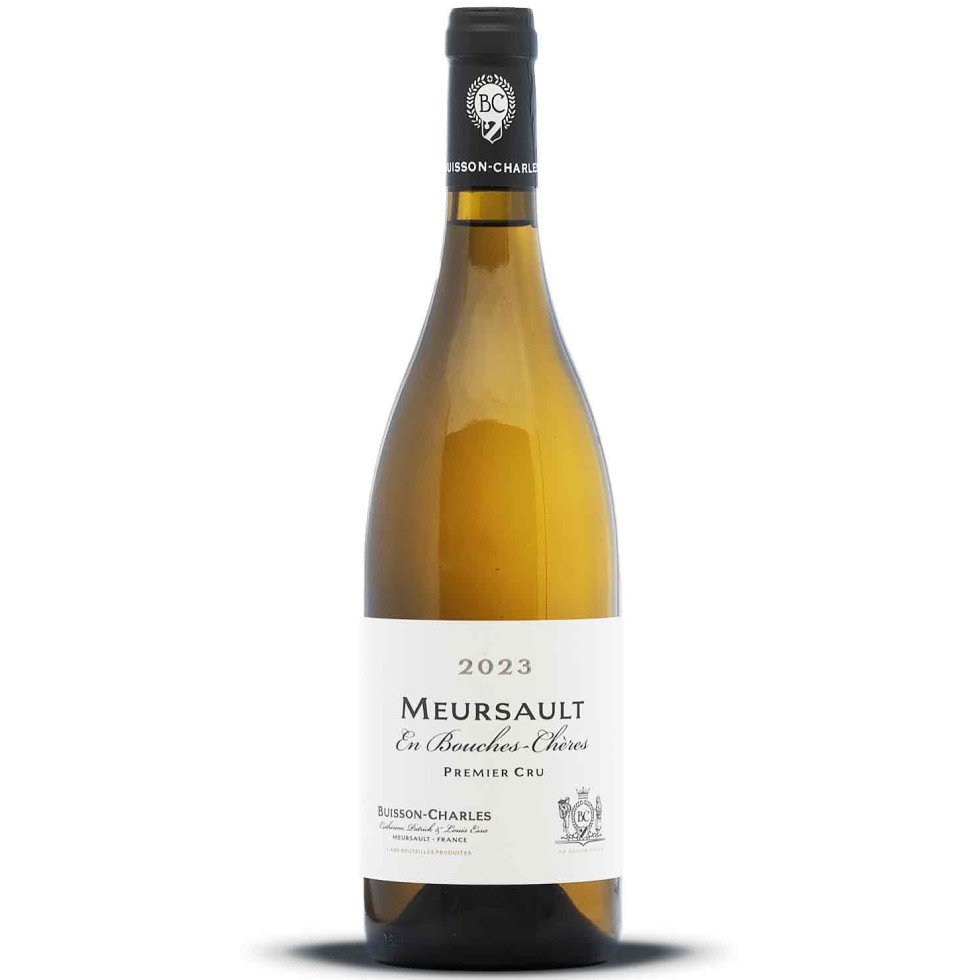
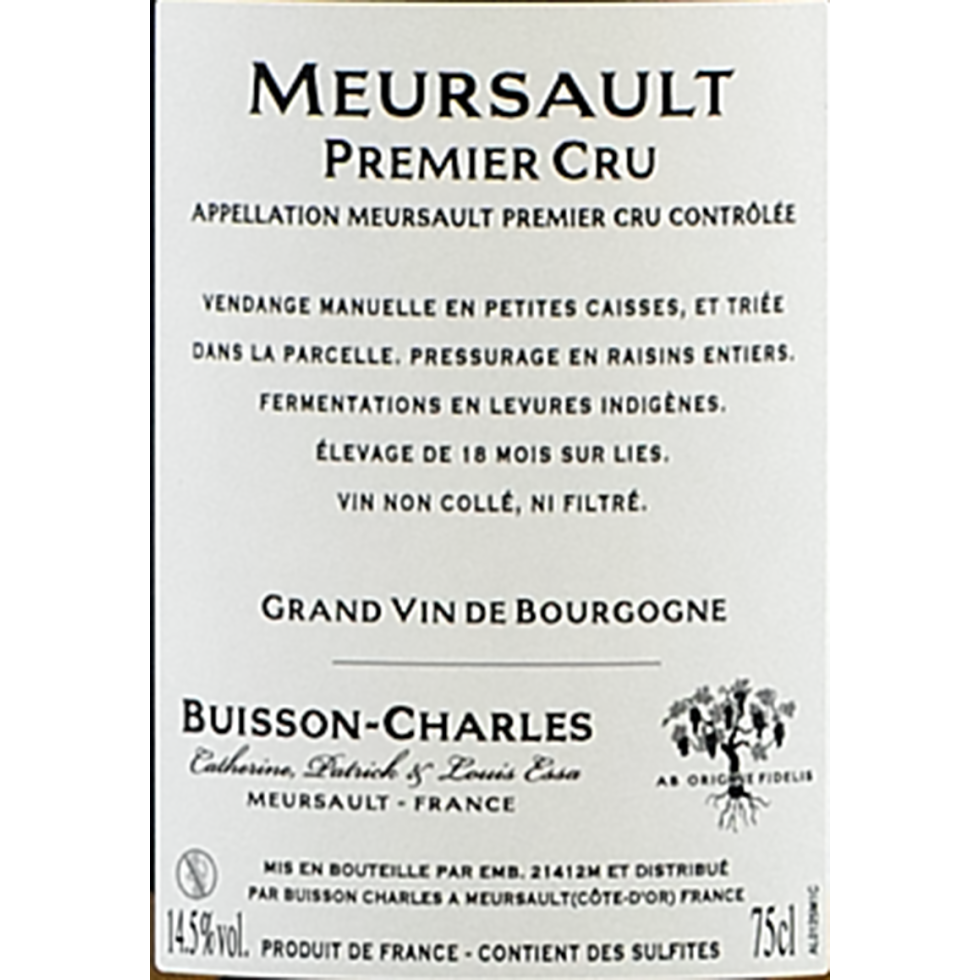
Meursault Premier Cru white 2023 - "En Bouches chères"
- White
- 75 cl
Meursault white 2022 Premier Cru "En Bouches Chères", from the highly sought-after Buisson Charles estate.
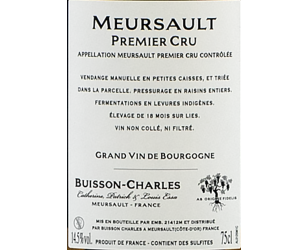


Meursault white 2022 Premier Cru "En Bouches Chères", from the highly sought-after Buisson Charles estate.
Meursault Premier Cru white 2023 - "En Bouches chères"
Complex
Powerful
Mineral
Fruity
Woody
Coming from the confidential Les Bouches Chères climate, located in the southern part of the Meursault finage, this 2023 Premier Cru from Domaine Buisson-Charles reveals all the finesse and distinction of this sought-after terroir. Thanks to limestone soils and an ideal exposure, this Chardonnay expresses a remarkable balance between richness, freshness and minerality, in the precise and pure style for which the estate is renowned.
The colour is brilliant, pale gold with luminous reflections. The nose, elegant and complex, opens with notes of white flowers, citrus fruits and white-fleshed fruits, complemented by delicate touches of hazelnut, fresh almond and a subtle buttery and slightly toasted nuance. On the palate, the attack is ample and silky, carried by a beautiful concentration and a mineral tension that brings energy and precision. The finish, long and harmonious, reveals a beautiful freshness and a fine salinity.
A great gastronomic wine, ideal with shellfish, noble fish, scallops, poultry in cream or aged cheeses.
Features :
Appellation : Meursault Premier Cru
Climate: Les Bouches Chères
Vintage : 2023
Domain : Buisson-Charles
Grape variety: 100% Chardonnay
Region: Burgundy – Côte de Beaune
Maturation: in oak barrels, with a proportion of new wood
Ageing potential: 8 to 12 years
A racy and elegant Meursault 1er Cru, combining generosity and tension, faithful to the high standards and precise style of Domaine Buisson-Charles.
12 to 14°
Sail in the Parcelle des Bouches Chères in Meursault:
White Burgundy Wines Round and Powerful: Foie Gras, Creamy Sauce Fish, Grilled Sea fish, Lobsters, lobsters, Cream Poulardes, Civet Volailles, Epoisse, Roquefort, Bleu de Bresse
Appellation
Premier CruType of Wine
StillWine Making
Oak casksGrape Variety
ChardonnayHarvest
ManualBurgundy Region
Côte de BeauneVintage
2023Service
12 to 14 degreesCustody potential
2031Degree of alcohol
14,5°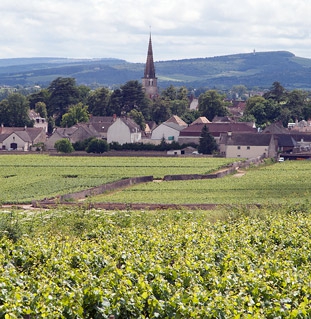
There are observable but minor differences between the wines of the different Climats (named plots). In most cases, Meursault is greeny-gold in colour or canary yellow, leaning towards bronze as it ages. Limpid and brilliant, it sometimes exhibits silvery highlights. Its bouquet has strong aromas of ripe grapes. The young wine is redolent of toasted almonds and hazelnuts in a floral (mayflower, elder, bracken, lime, verbena) and mineral (flint) setting. Butter, honey, and citrus fruits are also present. On the palate it is rich and fat with a cheerful and appealing taste of hazelnut. Unctuousness and freshness are in silky balance. Long and structured, it needs time to mature - this is a great white wine for laying down.
Its aromatic power and exceptional balance between fat and acidity make it an aristocrat among burgundies. Unsurprisingly, it has a natural affinity with noble and fine-textured fish or meat, which it can match without overpowering. It performs a similar feat with joints of veal or poultry in white sauce, which are rendered sublime by the wine’s unctuous texture and long, distinguished acidity. Still better are grilled lobster, crawfish, or king prawns in sauce - dishes whose aromatic intensity and crisp texture match the lively and supple balance of the wine. Even blue cheeses and foie gras take to it immediately.
Serving temperature: 12 to 14°C.
The hard Comblanchian limestone which disappears deep underground around Nuits-Saint-Georges reappears here where, as one moves southward, red wines give way to whites. Nowhere in the Côte de Beaune does the
Chardonnay grape do better than it does here. Along the village streets are a succession of little houses belonging to the vineyard workers, mixed with more imposing dwellings. The stone-work on the 53 metre-high church tower looks like it could be the work of fairies. The excellent soils were planted with vines by the monks of Cîteaux as early as 1098. A small amount of red wine is produced here, though white definitely dominates. Meursault’s appellation of origin status dates from 1937.
The best soils are found at heights of 260 metres with exposures along an arc between East and South. They consist of Jurassic marls and marly limestones.
There are some patches of magnesian limestone. The ancient callovien limestone and argovien marls shave the crus.
Source : https://www.bourgogne-wines.com
Today managed by Catherine Buisson and Louis Essa, the Buisson-Charles estate, of modest size - 6.3 hectares - has been cultivating for several generations plots located on the finage of Meursault which it completes, in ownership with the Volnay and Pommard crus, as well as through its trading activity with Corton and Chambertin for its red wines as well as Chassagne-Montrachet, Puligny-Montrachet, Chablis Premier Cru and Grand Cru, Pouilly-Fuissé Premier Cru and Corton-Charlemagne in whites.
