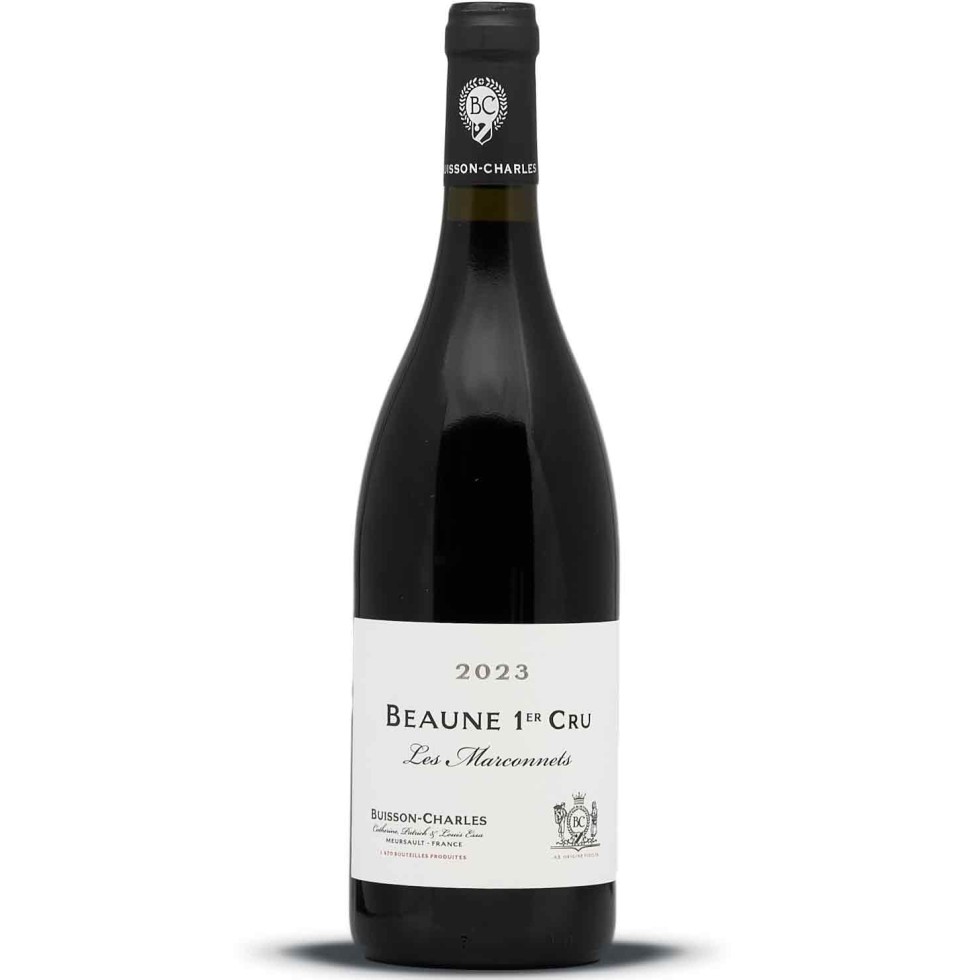
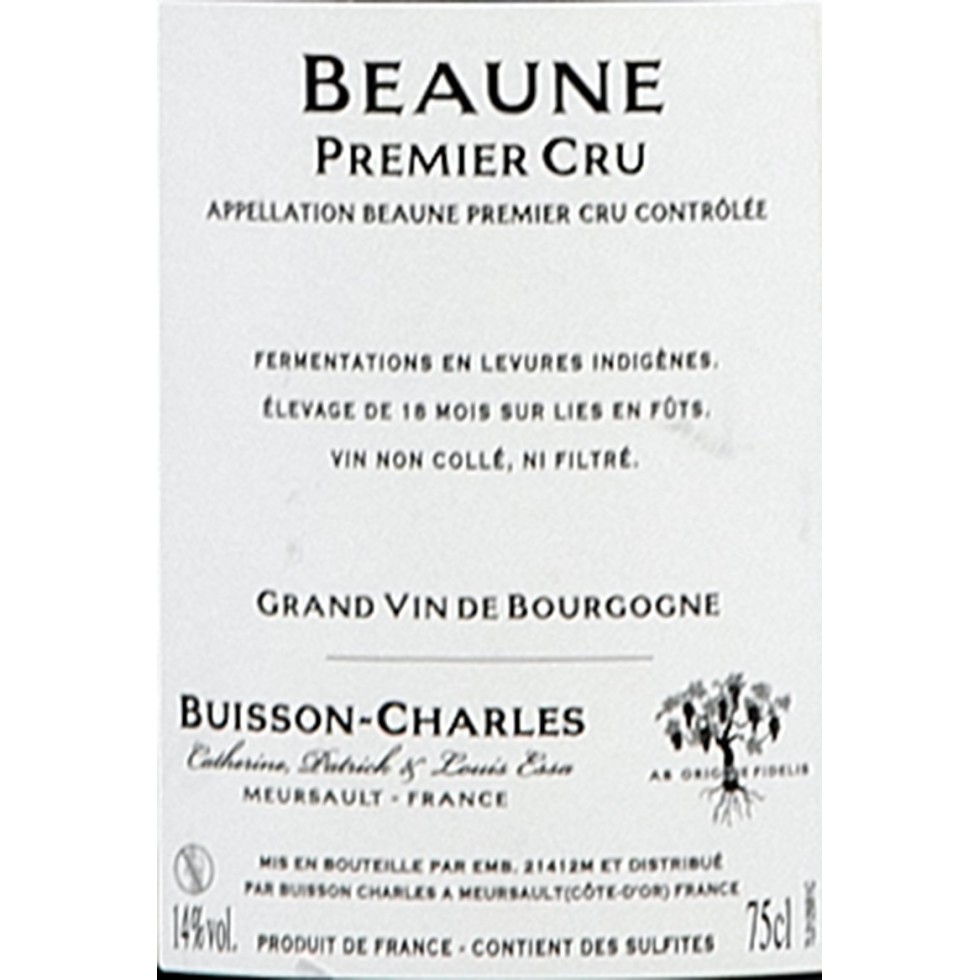
Beaune Premier Cru Red 2023 - "Les Marconnets"
- Red
- 75 cl
Located in the heart of the Côte de Beaune in Burgundy, Domaine Buisson Charles signs here the famous Beaune 1er Cru "Les Marconnets" racy and very elegant, in the 2023 vintage.
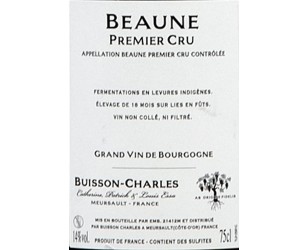


Located in the heart of the Côte de Beaune in Burgundy, Domaine Buisson Charles signs here the famous Beaune 1er Cru "Les Marconnets" racy and very elegant, in the 2023 vintage.
Beaune Premier Cru Red 2023 - "Les Marconnets"
Complex
Powerful
Mineral
Fruity
Woody
Located on the heights of the Beaune appellation, the "Les Marconnets" climate is renowned for producing wines that are both elegant, structured and with a good ageing potential. With this 2023 vintage, Domaine Buisson-Charles highlights all the finesse of Pinot Noir on this limestone terroir, signing a precise, balanced and sparkling wine.
The colour is a bright and deep ruby. The nose, delicate and expressive, reveals aromas of fresh cherry, raspberry and redcurrant, accompanied by floral notes and sweet spices. With aeration, subtle nuances of undergrowth and light woody touches from the ageing process appear.
On the palate, the attack is supple and harmonious, carried by a beautiful substance and fine and elegant tannins. The natural freshness of the wine brings dynamism and balance, while the finish, long and precise, reveals a beautiful mineral framework.
This Beaune 1er Cru will go perfectly with roast poultry, veal, lamb, grilled meats or even some mature cheeses.
Features:
Appellation : Beaune Premier Cru
Climate: Les Marconnets
Vintage : 2023
Domain : Buisson-Charles
Grape variety: 100% Pinot Noir
Region: Burgundy – Côte de Beaune
Maturation: in oak barrels
Ageing potential: 8 to 12 years
An elegant and racy Beaune 1er Cru, which combines fruit, finesse and structure, faithful to the precise and demanding style of Domaine Buisson-Charles.
Full, round Burgundy red wine: pasta and risotto, grilled or roasted pork, roasted veal, sauce or pan-fried, Lamb, poultry, rabbit, roast beef, game birds, liver, kidneys in sauce, skewers, kebab, woks, camembert, brie
Appellation
Premier CruType of Wine
StillWine Making
Oak casksGrape Variety
Pinot NoirHarvest
ManualBurgundy Region
Côte de BeauneVintage
2023Service
14 to 16 degreesCustody potential
2032Degree of alcohol
14°
Small differences appear, depending on the exact location. Wines from the Northern end of the commune are more often intense and powerful, and those from the southern end are smoother and fuller.
Red: this wine has a striking and vivid colour - a luminous scarlet, introducing aromas of black fruits (blackcurrant, blackberry) and red (cherry, gooseberry), as well as humus and underbrush. When older, it is redolent of truffle, leather, and spices. In youth, it charms the palate with the taste of crunchy fresh grape. Firm, upright and full of juice, it evolves with time, revealing a solid and absolutely convincing structure.
White: this wine boasts a silky gold colour, flecked with green. It has a bouquet of almond, dried fruits, bracken, and white flowers. It may be enjoyed either young “on the fruit” or later for its mouth-filling mellowness.
Red: fleshy and generous, the Beaune reveal great aromatic power and solid texture which inevitably partners them with musky and very firm meats such as feathered game, roasted or braised. Cheeses: choose Époisses,
Soumaintrain, Munster, Maroilles...
Serving temperature: 15 to 16°C.
White: their flowery freshness makes them a marvelous match for poultry and veal in creamy sauces, fish tajines, sushi, and grilled sea-fish. When older (and fleshier) they enfold and tame cheeses such as Cîteaux, Comté, and certain goat cheeses.
Serving temperature: 12 to 14°C.
A burgundian icon and capital of Bourgogne’s wine trade, Beaune takes centre place on the world stage during the annual Hospices de Beaune wine auction.
The Hôtel-Dieu, built in the Flamboyant style, the huge silent cellars of the négociants houses, and the wine-growing domaines of the district all attract countless visitors. The Beaune vineyards are among the most extensive of the Côte. From here comes the Pinot vermilion of the Dukes of Bourgogne- a red wine, aromatic and full of fire, whose reputation goes back to the late Middle Ages. The whites, less common, make the best use of soils suited to the Chardonnay grape.
The BEAUNE AOC was established in 1936.
In the synclinal of Volnay the Comblanchien limestone disappears into the depths to be replaced by the overlying Rauracian. The slopes are quite steep and the soil (scree-derived black rendzinas) thinnish. On the lower slopes are Argovian marls and deep soils, white, grey or yellow, tinged with red from the iron in the Oxfordian limestone. At the foot of the slope, limestones are mixed with clay. Exposure: east to due south. Altitudes: 220 to 300 metres.
Source : https://www.bourgogne-wines.com
Today managed by Catherine Buisson and Louis Essa, the Buisson-Charles estate, of modest size - 6.3 hectares - has been cultivating for several generations plots located on the finage of Meursault which it completes, in ownership with the Volnay and Pommard crus, as well as through its trading activity with Corton and Chambertin for its red wines as well as Chassagne-Montrachet, Puligny-Montrachet, Chablis Premier Cru and Grand Cru, Pouilly-Fuissé Premier Cru and Corton-Charlemagne in whites.
